
Tintah Court Docket Searches
Tintah posts no municipal docket of its own. It also offers no online case search or city court payment page. For a Tintah-related state case, use MCRO Case Search and set Traverse as the county. The best start is a full case number or citation number. Traverse state cases carry county prefix 78. Before treating a result as a Tintah court record, confirm the court location on the entry. Then confirm the category and case number too.
- Read the Tintah notice for its court name, issuing agency, case or citation number, payment address, and appearance instruction.
- For a state matter, accept MCRO's terms and choose the Case Number or Citation Number search tab.
- Select Traverse County, enter the known identifier, and open the case detail and Register of Actions.
- If the remote result is incomplete, use the courthouse public-access terminal or ask Court Administration about a paper, mail, copy, or certification request.
MCRO is an unofficial public view, not a certified service. A search there can surface case activity, document information, hearing settings, and judgment details for a Tintah matter.
Tintah Contact Record Limits
For municipal contacts, the county City Officials PDF is the official inventory covering Tintah. It is not a live court portal. The city has no separate court clerk page. It has no citation lookup, posted court hours, or current public contact page for court business either. Those gaps are worth stating plainly rather than papering over with generic municipal-court language.
For a municipal issue, use the current contact shown on a Tintah administrative notice. A verified county listing works too. Do not treat an older inventory as a court counter. For a state case, the citation carries the court name. Its county-prefix number routes you correctly as well.
Keep Tintah contact routing narrow. A city notice can name an agency or a current municipal contact. A citation naming a state court points elsewhere. Neither justifies publishing unverified Tintah phone, address, or office-hour details from an old list. A court-record request needs three things. The case number, Traverse court location, and official Court Administration channel are enough. For a municipal matter, rely on the current notice. Do not assume a court office exists.
The same caution protects personal data. A city-official inventory may hold fields a docket search never needs. City-level routing is sufficient.
Inside the Tintah Municipal Court
The city, county, and Judicial Branch name no current Tintah Municipal Court. That absence does not settle whether a local ordinance process exists. It simply means there is no basis to name a Tintah judge, clerk, court day, docket, payment site, or local calendar. Handle a municipal notice by its own instructions unless it identifies a court case.
Ordinance administration and a state court record are different things. A council item may show local rules or city action, while a court ROA logs the chronological public events in a filed state case. No city name or local address turns municipal material into a Tintah court docket. The citation's court name controls.
Tintah Citation-First Records
For Tintah, a citation-first search beats a broad name search. The notice may carry a state citation number or a court file number. It may also show the issuing agency, a payment direction, and an appearance date. Those details separate a state court matter from a Tintah municipal administrative notice. A case number starting with 78- carries weight. The Traverse state-court system is then the practical route for a docket search.
| Tintah document detail | Why it matters | Next channel |
|---|---|---|
| Court name and 78 case number | Identifies a Traverse state case | MCRO, courthouse terminal, or Court Administration |
| Citation number | Can locate a citation matter in MCRO | MCRO Citation Number tab |
| City administrative instruction | Identifies the stated municipal issue | Verified current municipal route |
That distinction matters. It stops a reader from treating a city notice as a public ROA, or reading a state court result as proof that Tintah keeps a separate docket.
Finding Tintah Court Dates
A Tintah-related state hearing may surface in the MCRO ROA. It may also appear in MCRO Hearing Search or the Traverse daily calendar if public. The local calendar posts by 7:00 a.m. on business days. It then updates hourly. Confidential and non-remotely-accessible matters are left off. So a missing Tintah listing proves nothing about cancellation, a reset, or the existence of a case.
| Date | The newest public date in the ROA or daily calendar. |
|---|---|
| Time | The displayed setting time, which can change in a later event. |
| Court | Traverse County District Court when the notice names a state case. |
| Setting type | The displayed label, such as initial appearance, pretrial, motion, plea, trial, sentencing, review, or other hearing. |
| Confirmation | The printed courthouse calendar is described as most current for same-day questions. |
Tintah keeps no separate court calendar. If a Tintah notice and a public result conflict, Court Administration can clarify the record-access procedure and the calendar source.
Tintah Calendar Absence
Calendar absence carries real meaning for Tintah docket work. The Traverse daily PDF is a public hearing snapshot. It is not a complete docket and not proof a case was dismissed. Confidential and nonremote matters stay off it. An old date can linger in an ROA after a continuance. Meanwhile a newer event shows the current setting. The sensible Tintah order starts with the current PDF. Then comes the newest ROA or Hearing Search, the printed courthouse calendar, and finally Court Administration.
Key point: A Tintah case missing from the public calendar may be restricted, nonremote, or moved. It should not be treated as cancelled until the court confirms the status.
That restraint matters. A Tintah calendar search has procedural limits, and a small-city name alone is not a safe identifier for a court case or record request.
Tintah Traffic Ticket Lookups
Start with the citation number. Minnesota prints it right on the ticket, usually as a 12-digit number. If the paperwork names a court matter, use the state-court search route. The MCRO Citation Number tab is the right one. A Traverse case number may carry the 78 prefix plus the statewide category code. Keep the punctuation and leading zeros just as the system requests. Don't guess at the format.
A payment reference aimed at the city is not a court payment. Tintah offers no city court payment page. Statewide payment options cover only citations the notice marks as payable. Under Minnesota guidance, paying a payable citation counts as a guilty plea. It waives named rights. When an appearance is required, follow the notice rather than a general online payment path.
Tintah State Case Numbers
The Traverse prefix is your best local clue in a Tintah state-case search. It mixes county code, case type, year, and sequence. A criminal matter looks like 78-CR-YY-####, while a civil matter may read 78-CV-YY-####. Use the exact number from your notice. A known Tintah number is far more reliable. It beats a name query, especially when the city name might appear only in an address field.
- Register of Actions
- The dated public history of filed court events.
- Document index
- The list of documents linked to a case, subject to access restrictions.
- Certified copy
- A court-authenticated product from Court Administration, not an MCRO download.
- City administrative notice
- A Tintah municipal record that may not be a court record.
Narrow any Tintah name search to Traverse first. Then check the result against the full case information, because name searches can leave out pending no-conviction criminal, traffic, and petty-misdemeanor cases.
How Tintah Cases Reach the County
Tintah state cases land at Traverse County District Court in Wheaton. That is the local state trial court. Its docket covers civil, family, probate, juvenile, criminal, and traffic matters filed in Traverse County. MCRO is the remote layer. Think of access in layers. Court Administration and the public terminal handle certifications, paper records, and older materials. They also answer what the online interface cannot. A Tintah city administrative matter stays separate unless the notice identifies a court case.
Record flow: Tintah city administrative notice › current municipal instruction; Tintah state citation or case › Traverse County District Court › MCRO Register of Actions; appeal from a district-court order › Minnesota Court of Appeals public case information in P-MACS.
Not every Tintah event becomes a court case. The citation, court name, and case number decide whether the county state-court path applies. The Traverse County District Court page is the official source for the court and its Court Administration route.
Tintah Higher-Court Records
A Tintah matter does not become appellate or federal automatically. It takes more than arising in Traverse County. District-court appeals in Minnesota run through P-MACS, a system separate from MCRO. Federal civil, criminal, and bankruptcy files live in federal systems. Neither the Tintah nor the Traverse ROA reaches them. Know which court holds the file. Keeping the systems straight pays off. It sends a Tintah reader to the court that actually has the record. The Minnesota appellate public-access portal is the official channel for the appellate record.
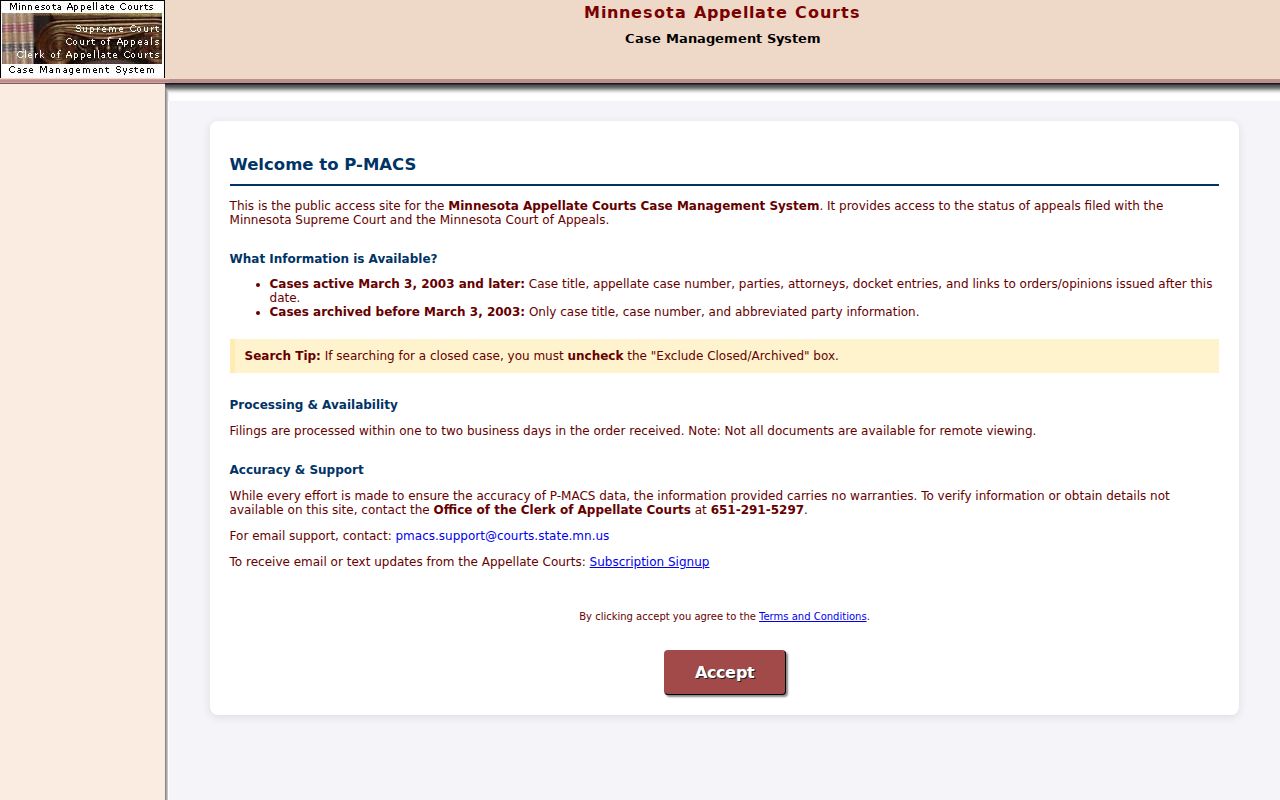
State appeals are not county records. The appellate source matters only after a Tintah state case reaches the Minnesota appellate system, and the District of Minnesota contact page identifies that separate federal court system.
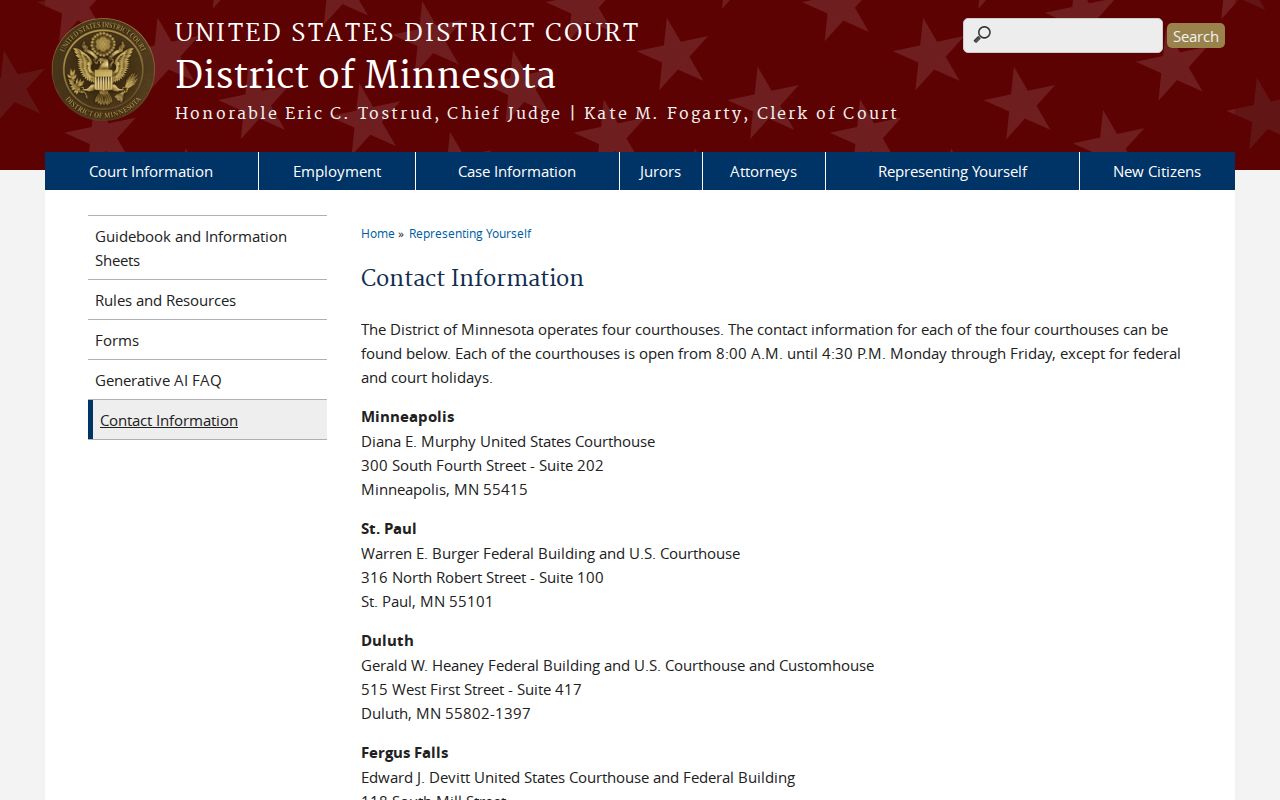
That federal page also makes one thing plain. A Tintah state court record should never be searched as a federal case without a federal case number.
Who Can See Tintah Court Records
Tintah state court records answer to the Minnesota Rules of Public Access to Records of the Judicial Branch, not to any city court-records portal. Inspection and copying happen during regular hours. Remote access can be narrower. MCRO is the public online view, and the courthouse terminal is the fuller electronic fallback. Court Administration handles certified copies and restricted-record procedures.
Access rules: Rule 8 governs public inspection, copying, remote access, calendars, and indexes. Rule 4 identifies nonpublic categories. Rule 11 addresses redaction and nonpublic filing treatment.
An online Tintah search result is unofficial. A certified copy needs more. Give the case number, year, and exact document, then confirm the current product, payment, and delivery details with Court Administration.
Tintah Court Record Privacy
Tintah counted 67 residents in the 2020 Census. A court lookup there should stay tied to a real procedural need. It also needs a known identifier. Juvenile, family, mental-health, commitment, protected, sealed, and redacted records can be restricted. A public case may show only a limited shell. Its image may not be available remotely. City ordinance material will not tell you whether a violation was filed, paid, dismissed, or adjudicated.
Privacy starts with how you search. A Tintah citation number or complete case number narrows the hunt without turning a name query into a list of neighbors. Names alone are the wrong tool. Public records keep every limit in the Judicial Branch rules, and a restricted record does not become public just because an online search returns nothing. Keep the inquiry on the stated case or municipal notice. A confidential-record request may run through the CON100 and CON101 process. A judicial officer decides access. The city runs no clerk page, docket portal, or citation lookup.
Federal bankruptcy is a different track. A bankruptcy's county assignment is federal, not part of the local state-court record route. Don't mix the two. The Minnesota Bankruptcy Court offices-by-county page documents that separate federal assignment channel.
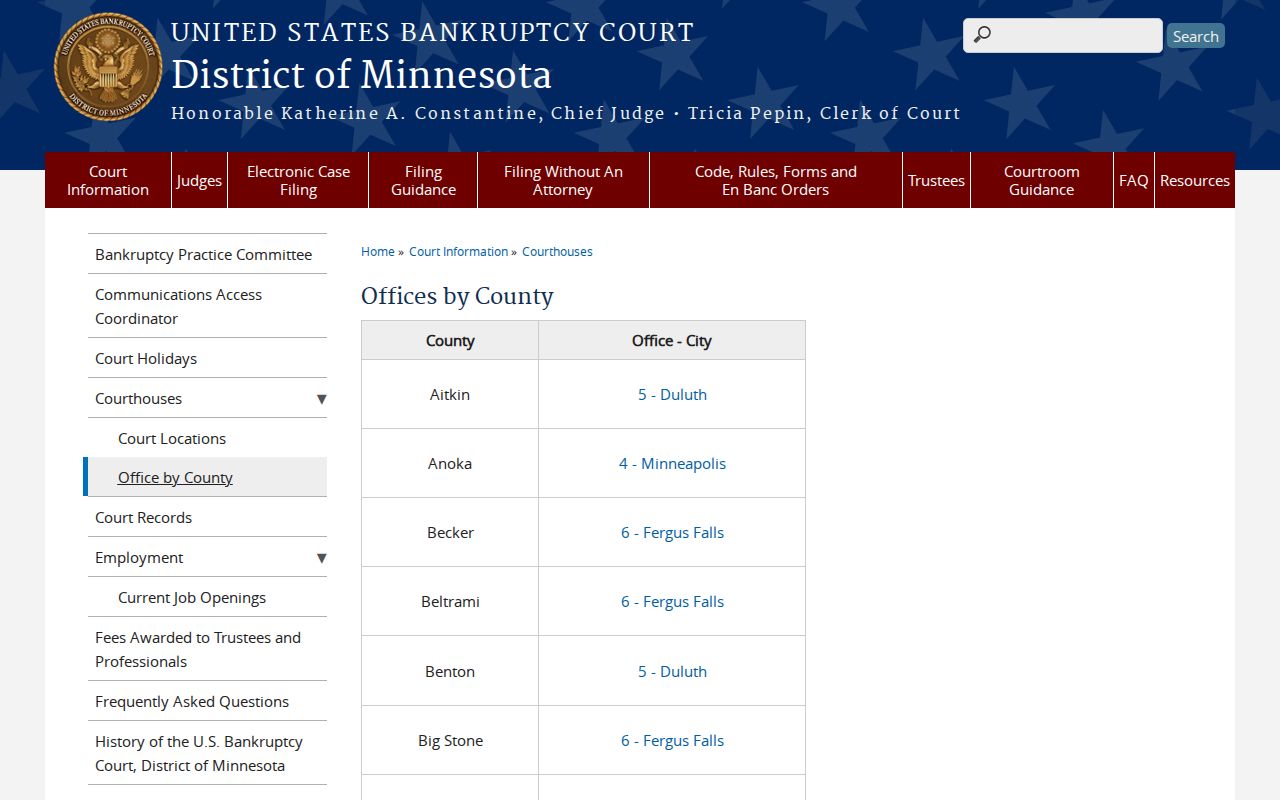
State and bankruptcy records sit in different systems. The Fergus Falls federal courthouse page gives the official location for that separate federal court. It backs up the split.
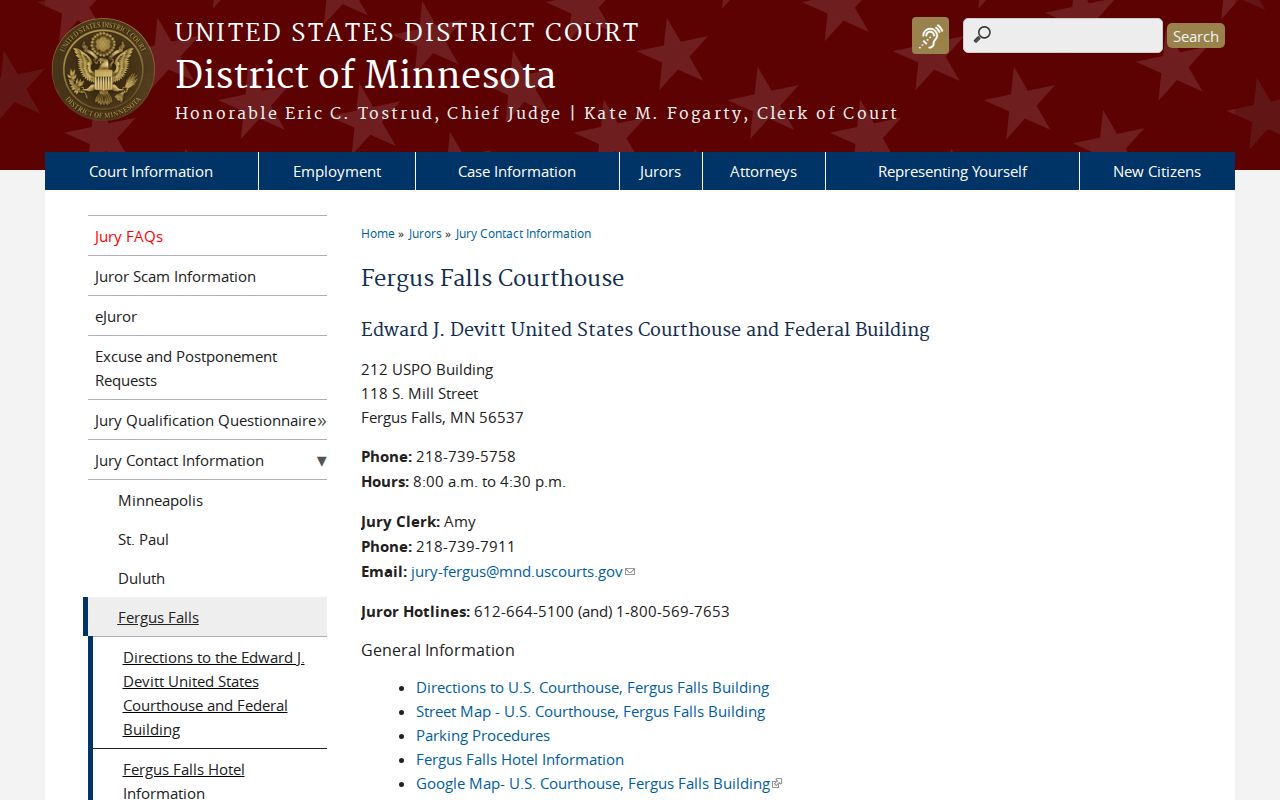
That courthouse is not a Tintah municipal court. It does not replace the Traverse state-court access route for a Tintah record.