
Traverse County Criminal Docket Searches
Minnesota Court Records Online Case Search, or MCRO, is the remote entry point for a Traverse County criminal docket search. Set the case category to Criminal. Set the court location to Traverse. A case number beats every other identifier. A name search works too, though it may miss a pending criminal, traffic, or petty-misdemeanor matter that carries no conviction. Open the matching Traverse County result. Read the Register of Actions in date order, checking the charge and its status before anything else. Tell a scheduled hearing apart from an event that already happened. When public, a financial information area may appear. Remember that a downloadable MCRO document is not a certified court record, so request any needed disposition or judgment from Traverse County Court Administration.
- Open MCRO and select Criminal plus the Traverse court location.
- Enter the known Traverse County case number first, or use the name fields cautiously.
- Open the blue case link and confirm the case header before relying on the ROA.
- Read dated charges, hearings, motions, and any displayed disposition or financial entry.
- Ask Court Administration for an authenticated copy of the exact Traverse County record needed.
Note: A name search that returns nothing can mean remote-access limits or an unposted matter, not proof that no Traverse County case exists.
Traverse County Criminal Case Numbers
A Traverse County case number combines county code 78, a case-type code, a two-digit year, and a sequence. The common criminal pattern is 78-CR-YY-####. That prefix can narrow a Traverse County criminal docket search. The full number as displayed still controls. Statewide materials add that CR generally marks a mandatory-appearance citation case and VB a non-mandatory-appearance citation case. Treat those labels as conventions rather than promises that every criminal or traffic matter fits the same mold.
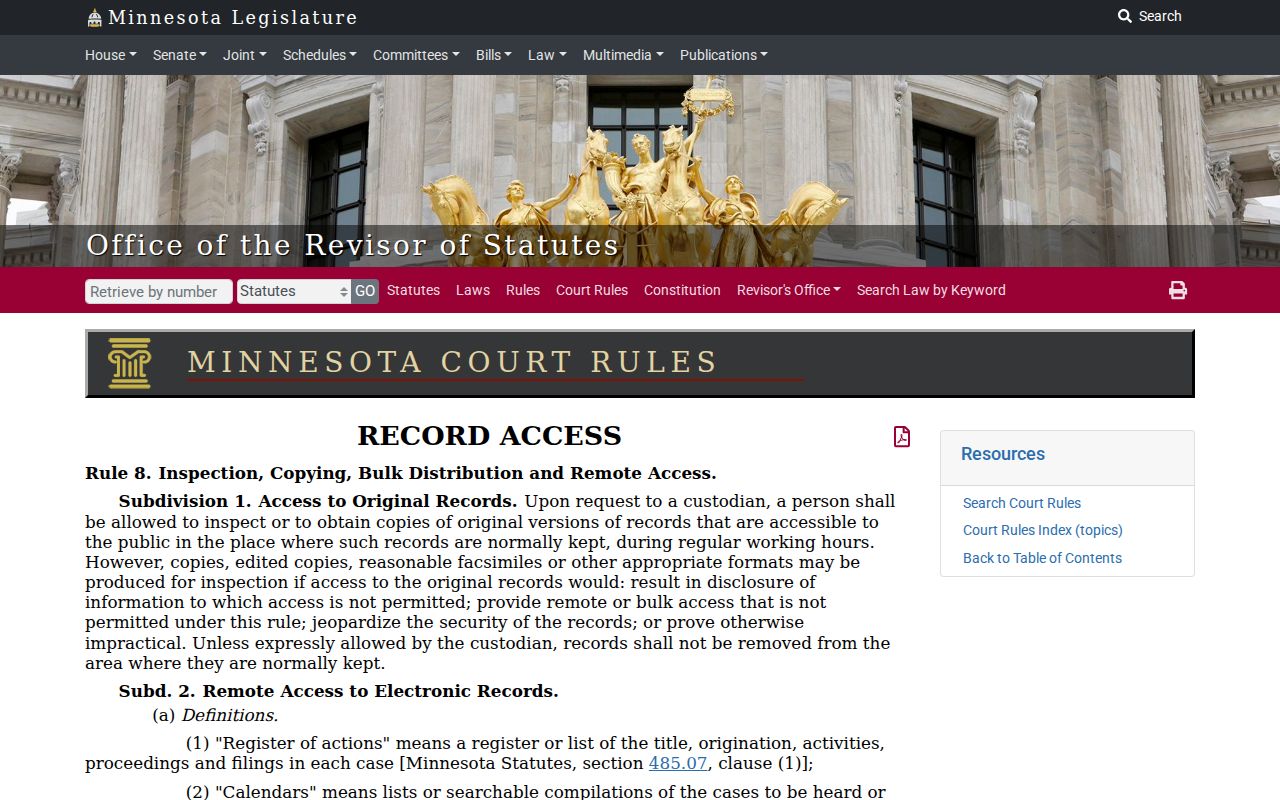
Why does the number matter so much? A person with a pending Traverse County matter often gets a cleaner result. A case number beats a common name. Keep the punctuation and digits exactly as MCRO requests. When only the number on a citation is known, use the Citation Number tab for that traffic-related record instead of guessing at a criminal number. Minnesota Rule of Public Access 8 sets out the official public inspection and remote-access rules. Those rules govern how a Traverse County criminal docket number gets searched.
In Traverse County, treat the number as a search aid only. The title, category, and ROA chronology confirm which court file was actually found.
Criminal Dockets: What They Show
A Traverse County criminal Register of Actions usually opens with the case header, then lists dated court activity. Parties and attorneys may appear. Charges and statutory classifications, hearings, motions, a plea, a disposition, sentencing, financial information, and references tied to an appeal can also show. Fields vary with the case and the access rules. Read the charge and the disposition as separate things. A charge is an allegation, not a conviction. Words like dismissed, convicted, deferred, disposed, or judgment entered should be taken from the full wording shown in the Traverse County ROA, not paraphrased. Traverse County publishes no official code sheet, so generic abbreviations should never be expanded as though they were local court codes.
| Case number | Traverse County identifier, commonly beginning 78-CR- for a criminal case. |
|---|---|
| Charge block | Public offense description, statute or classification, and displayed charge status. |
| ROA events | Dated filings, motions, orders, hearings, and other court activity in sequence. |
| Disposition | The displayed case result, which must be read separately from the allegation. |
| Financial information | Publicly exposed fines, costs, restitution, payments, or balance information where available. |
Traverse Criminal ROA Terms
Plain terms make a Traverse County criminal docket easier to read. An arraignment is a hearing where charges and rights are addressed. A motion asks the court to act. A setting is a scheduled court event. A disposition is the recorded result. The ROA can list each of these at different dates, and none of them alone turns the record into a conclusion about a person.
- Register of Actions
- The chronological court history for the Traverse County case.
- Pretrial or status hearing
- A progress setting, not a finding that the case is finished.
- Bond event
- A displayed entry about release or security terms; its context comes from the full ROA.
- Warrant or capias indicator
- A court process entry that should be read with its date and later events, not in isolation.
- Certified copy
- A court-authenticated reproduction obtained through Court Administration, not an MCRO download.
Traverse County records can show a public case shell while a document, identifier, or evidence item stays unavailable remotely. The calendar is only a setting snapshot. The ROA supplies the chronology that follows it.
Criminal Case Stages on the Docket
A Traverse County criminal docket may run from complaint or citation filing to an initial appearance or arraignment. From there the case can move through bond or release events and pretrial settings. Motions may follow. A plea or trial comes next, then disposition, sentencing, and possible post-judgment activity. Not every case displays every stage, and the exact ROA words control. A scheduled line is not a result. That holds even when it sits near a later event on the docket.
Docket flow: Filing → Arraignment → Pretrial → Plea or Trial → Disposition → Sentencing
To confirm a live Traverse County setting, compare the ROA with the official daily Traverse calendar or contact Court Administration. The county calendar carries updated information. Its absence alone does not prove a case was cancelled or rescheduled.
Traverse Criminal Documents After 2015
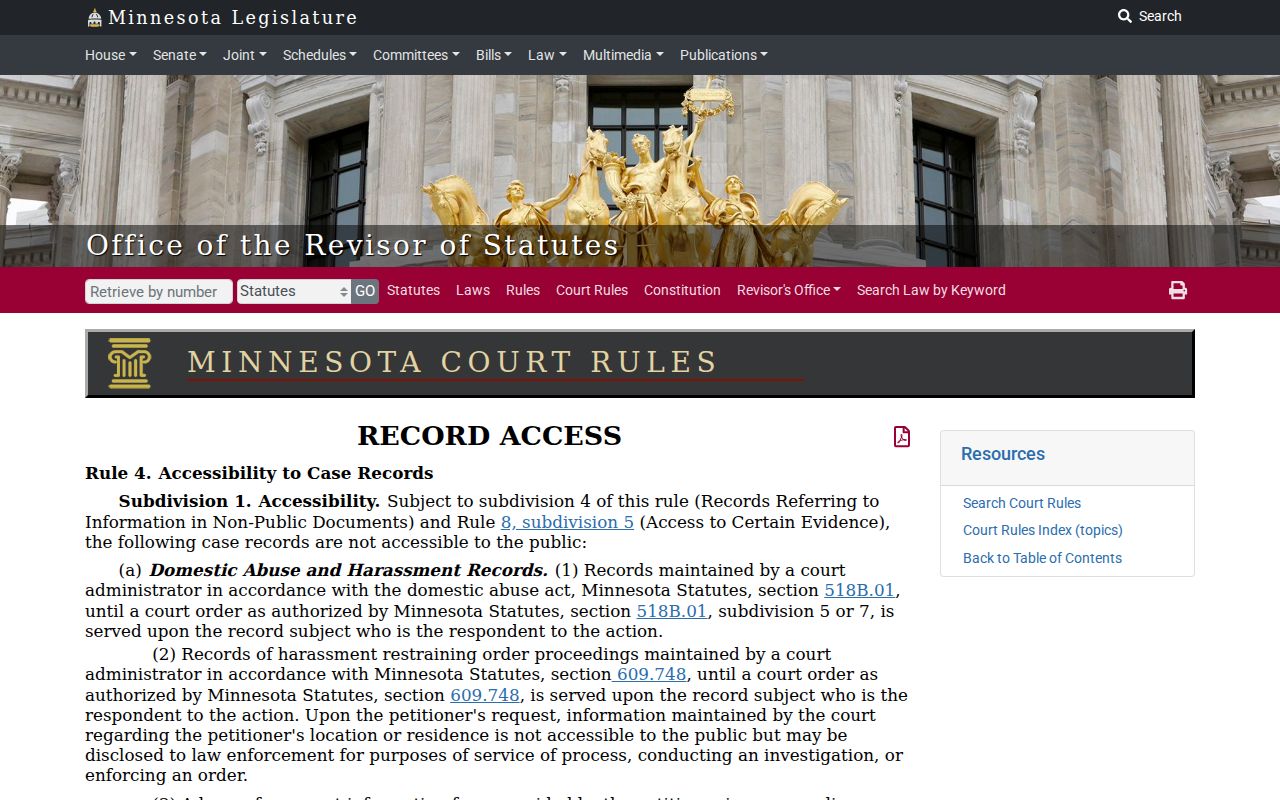
MCRO describes remote coverage for public major and minor criminal documents filed on or after July 1, 2015, subject to case-specific restrictions. That date describes coverage only. It does not promise that every Traverse County document image appears online. Evidence, sealed material, protected identifiers, and other nonpublic content can stay unavailable. That holds even where the docket itself shows. Minnesota Rule of Public Access 4 lists the categories closed to the public, and the official rule accompanies this Traverse County criminal docket access point.
That gap matters. A Traverse County search may show a case title or an ROA entry while the document image stays out of reach. Ask Court Administration about the public-copy procedure, though staff there cannot give legal advice.
Traverse County Criminal Docket Courts
One courthouse handles criminal matters in Traverse County. Traverse County District Court, part of the Eighth Judicial District, is the single state trial-court location the county has. No separate county criminal court or independent municipal criminal docket exists. So criminal cases, including traffic-related criminal and petty-misdemeanor matters, land in the district court record unless a citation names another authority.
Court Administration keeps the local court docket. It takes questions about public paper access, certified copies, and current settings. You will find the courthouse at 702 Second Avenue North, P.O. Box 867, Wheaton, MN 56296. The office telephone is (320) 422-6010. The official listing names Court Administrator Rachel Schmidt and posts weekday office hours. Judge assignments are not listed in the directory, so direct that question to Court Administration.
| Traverse County court | Criminal docket role | Public search route |
|---|---|---|
| Traverse County District Court | Original jurisdiction over county criminal and traffic matters | MCRO Criminal search, courthouse terminal, or Court Administration |
Note: A Traverse County city ordinance alone does not create a separate city criminal court record.
Traverse Criminal Remote Access Limits
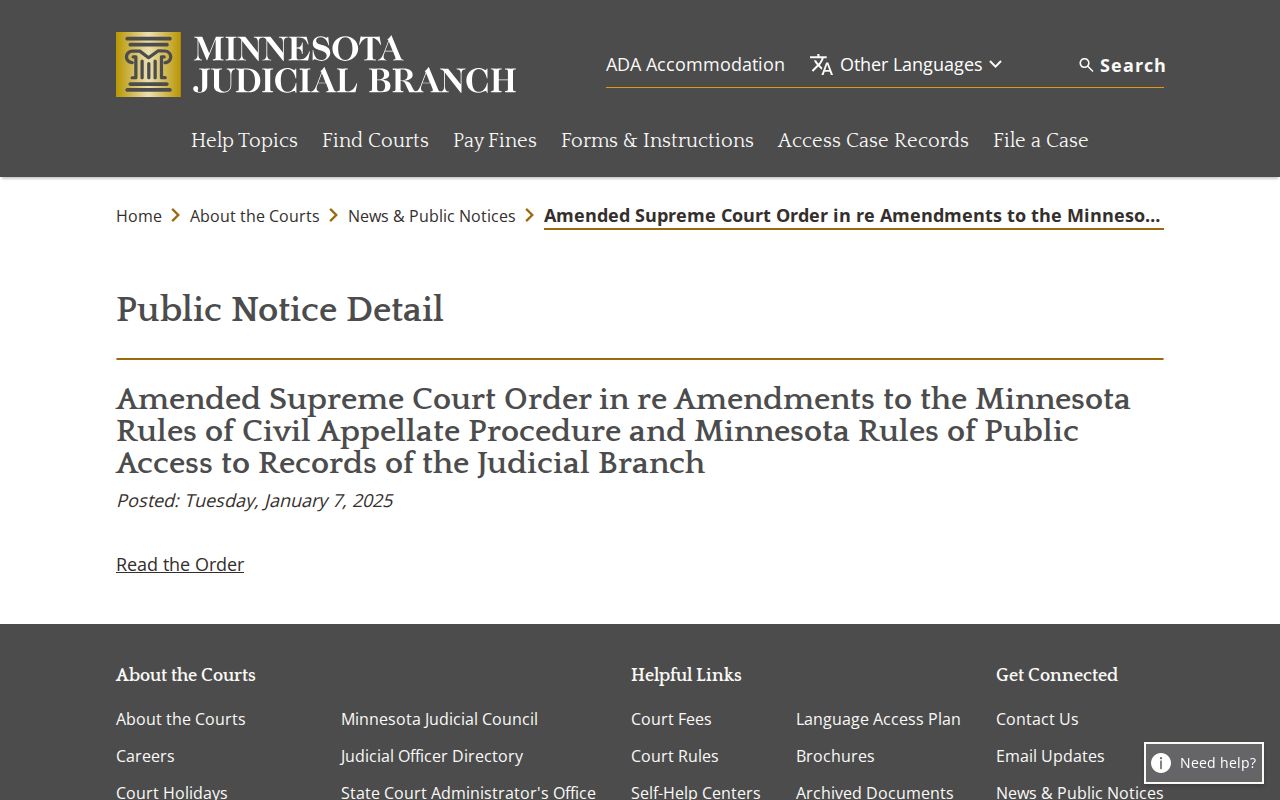
Sitting at a courthouse terminal gives you more than remote access does. A Traverse County criminal docket viewed remotely may show a case header, calendar entry, or ROA. Meanwhile, identifiers sit redacted or documents stay unavailable. Protected personal data, sealed material, juvenile and CHIPS matters, evidence, and other restricted categories are limited. The current rules plus any specific court order govern them. The Judicial Branch public-access order shows the governing rules from the official source. That order sits at the center of this Traverse County criminal docket discussion.
A known Traverse County case not showing up is not the end. Try the exact case number, a courthouse terminal, and Court Administration before you conclude anything. Someone seeking a confidential record may need the statewide CON100 or CON101 process. A judicial officer decides that request.
Note: remote document visibility in Traverse County varies by case type. Use the courthouse terminal or Court Administration before treating an omission as final.
Access Rules for Criminal Dockets
The Minnesota Rules of Public Access to Records of the Judicial Branch govern public court access in Minnesota. No county-built records portal controls it. In Traverse County, MCRO gives the public its remote view. The courthouse offers fuller public electronic access. Court Administration handles paper, older records, and certified copies. A case missing from the remote view can be restricted or sealed. It may just sit beyond what the public remote view shows.
Public-access rules:
Rule 8 covers inspection, copying, calendars, indexes, registers of actions, and the narrower scope of remote access.
Rule 4 identifies records and categories not available to the public.
General Rule 11 addresses redaction and nonpublic documents; General Rule 14 governs e-filing and service without making restricted material public.
Minn. Stat. § 357.021 is the fee authority behind the Judicial Branch fee schedule for a requested court product.
Ask for a certified Traverse County disposition with the case number, the exact document, and the certification level you want. Copy requests can go through Court Administration in person, by mail, or by eFiling under the current statewide procedure. The public ROA helps you track a court matter. It cannot replace the original record Court Administration holds.
Traverse County Criminal Copy Requests
Know what you are asking for before requesting a Traverse County criminal court document. A Register of Actions is the dated docket history. A document index lists filings, and a calendar is a hearing-setting snapshot. A certified copy is the court-authenticated version of a chosen record. Naming the product precisely keeps you from ordering the wrong item. It also helps Court Administration pick the public route that works.
Public access to an available record can start in MCRO. It can also start at a courthouse terminal or through Court Administration. Provide the Traverse County case number and year. Give a title or description of the item, the quantity, your delivery preference, and whether you need plain, certified, or exemplified treatment. Confidential-access requests may require the statewide CON100 or CON101 procedure and a judicial decision.